





Demo Enterprise RAG
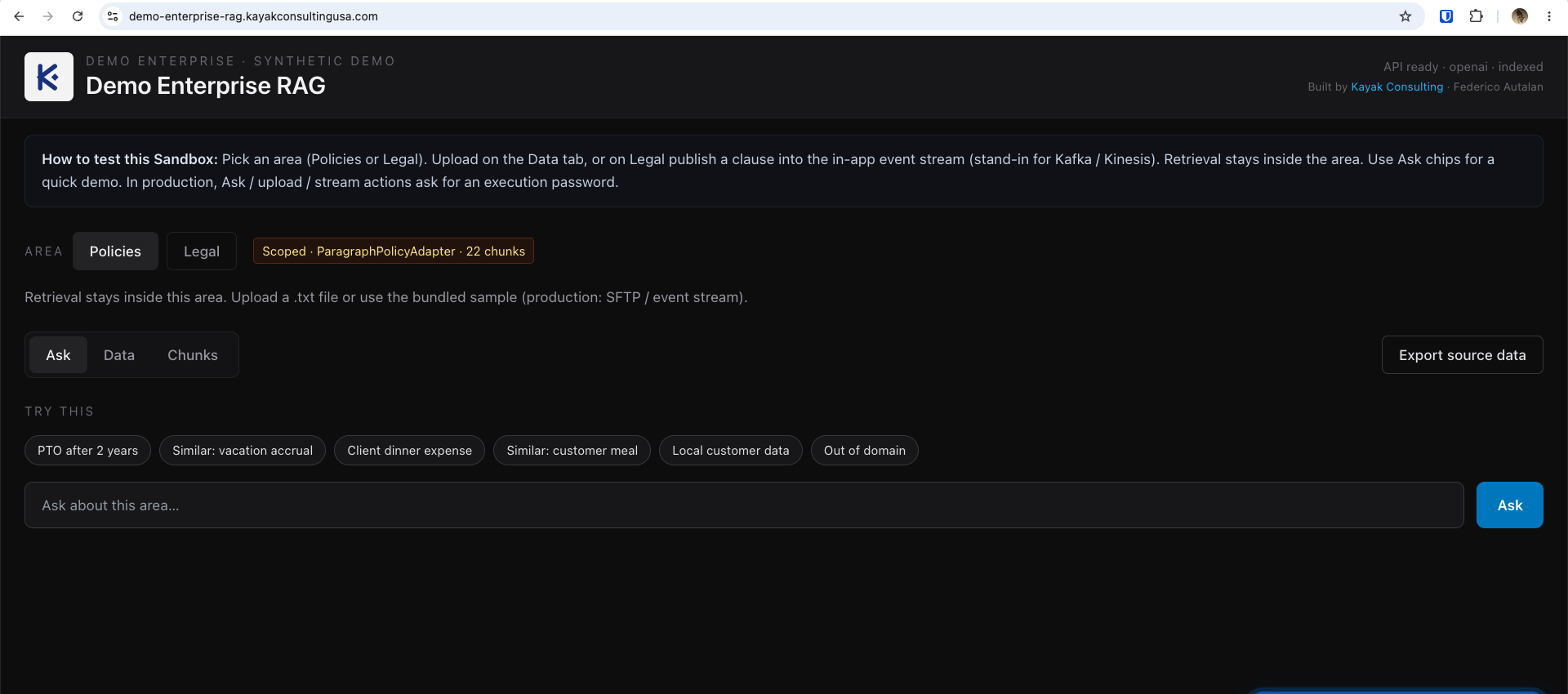
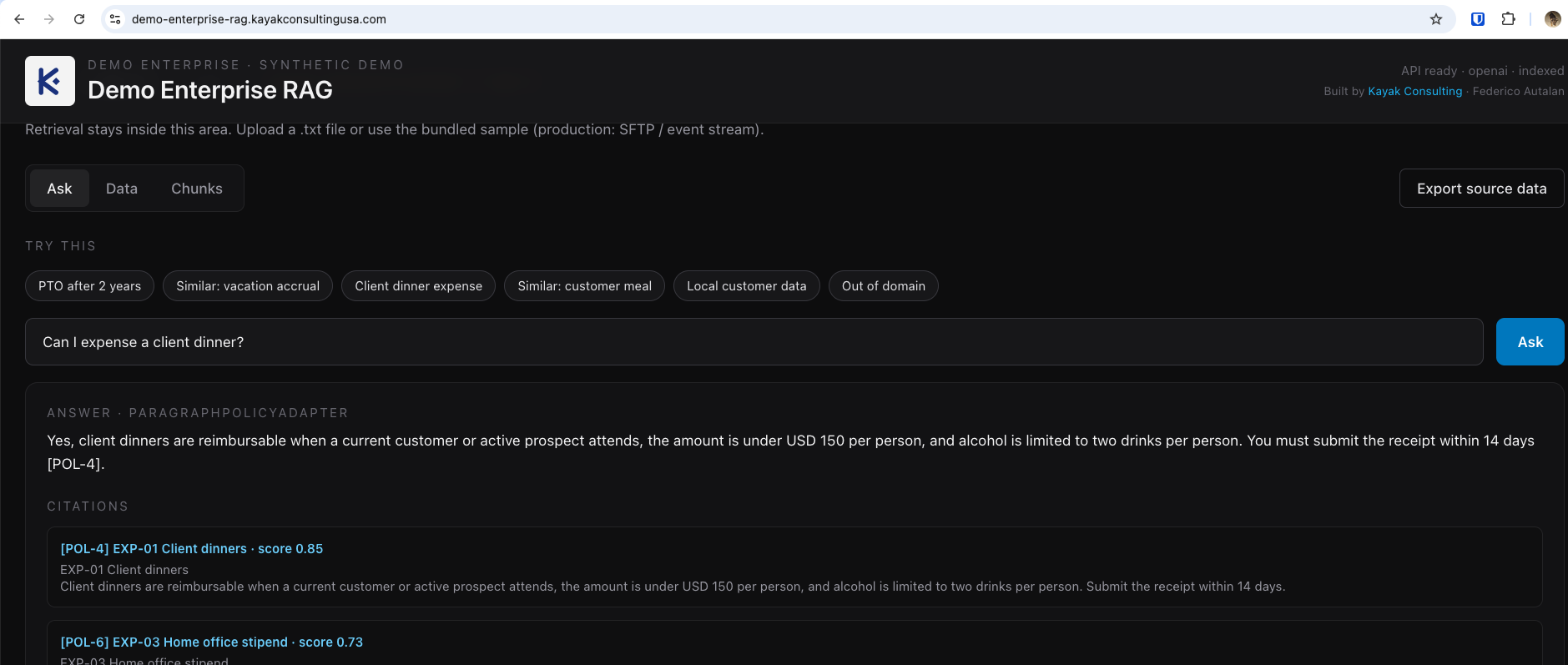
Inside a company, getting a straight answer with a source is the hard part. Otherwise you dig through handbooks, clause libraries, and shared drives.
One RAG core (generate + cite), scoped by area. Policies and Legal keep separate adapters and indexes so retrieval never mixes. Ask in the right area; get an answer with citations you can check.
Intentionally small for a clear walkthrough. Same made-up company. Built to show how you’d wire this in a Spring Boot shop — not another chatbot wrapper.
Scoped retrieval · Policies vs Legal
AI SRE Incident Pipeline
Production alerts often name the condition, not the failing line. On-call opens a ticket and starts from scratch.
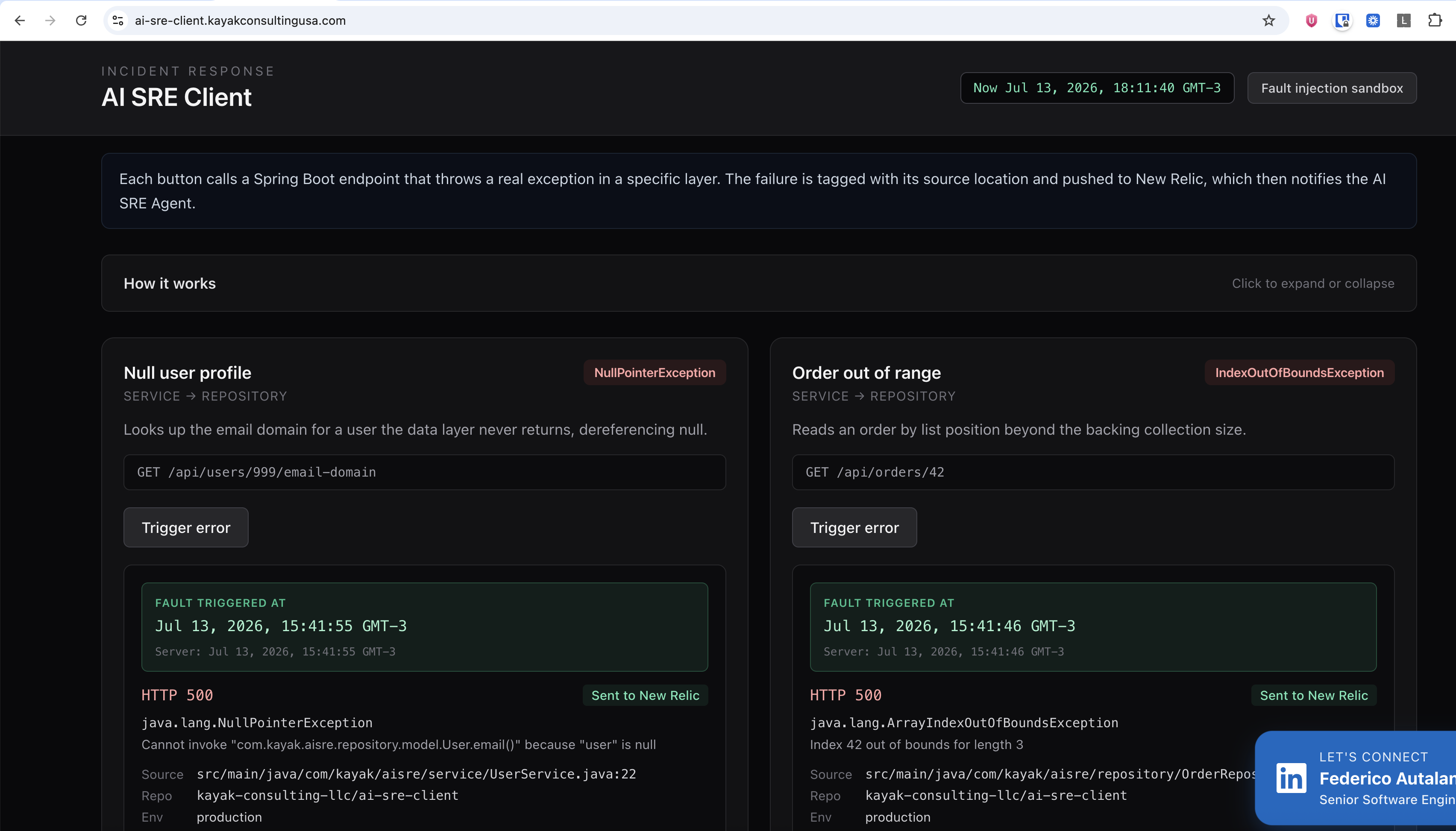
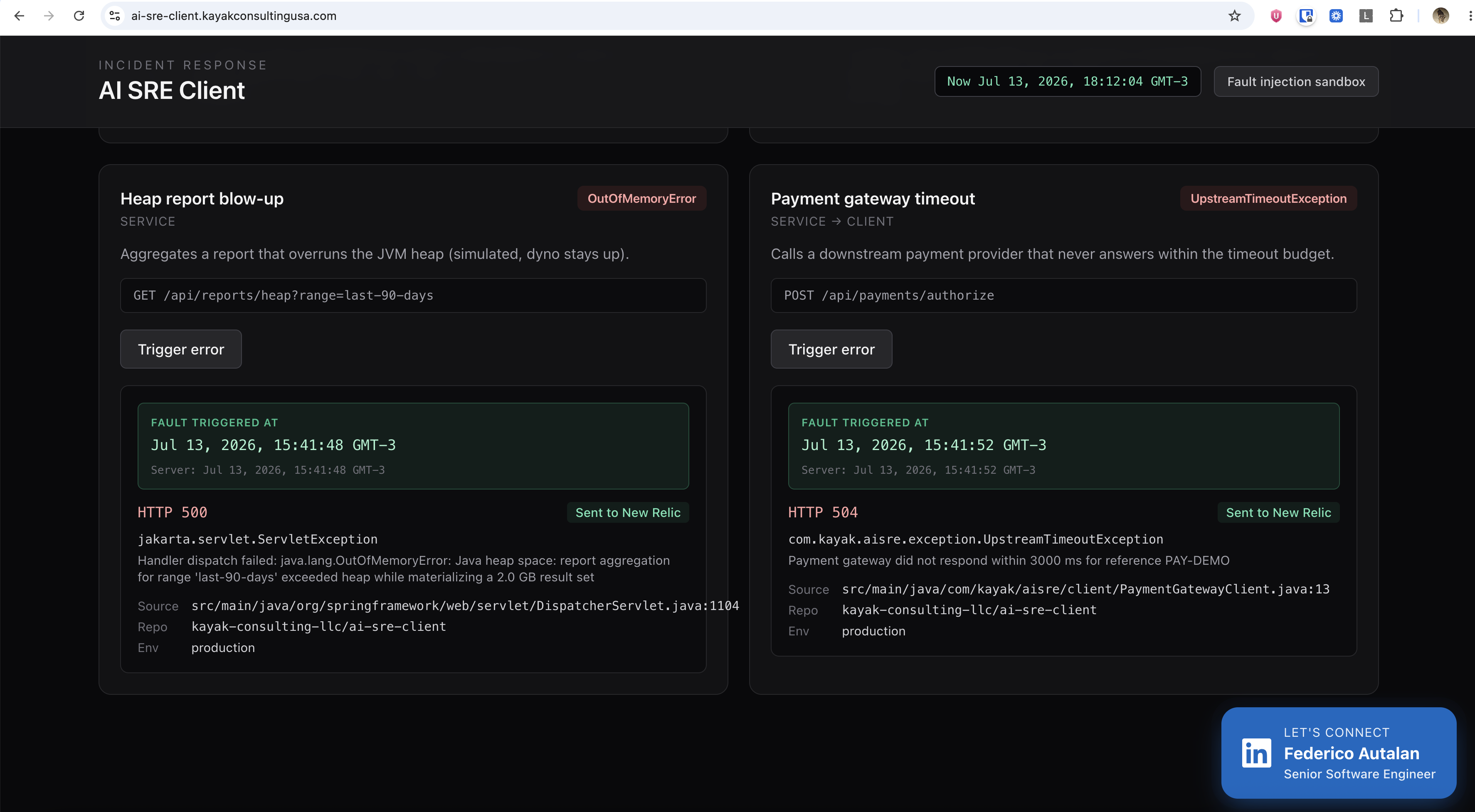
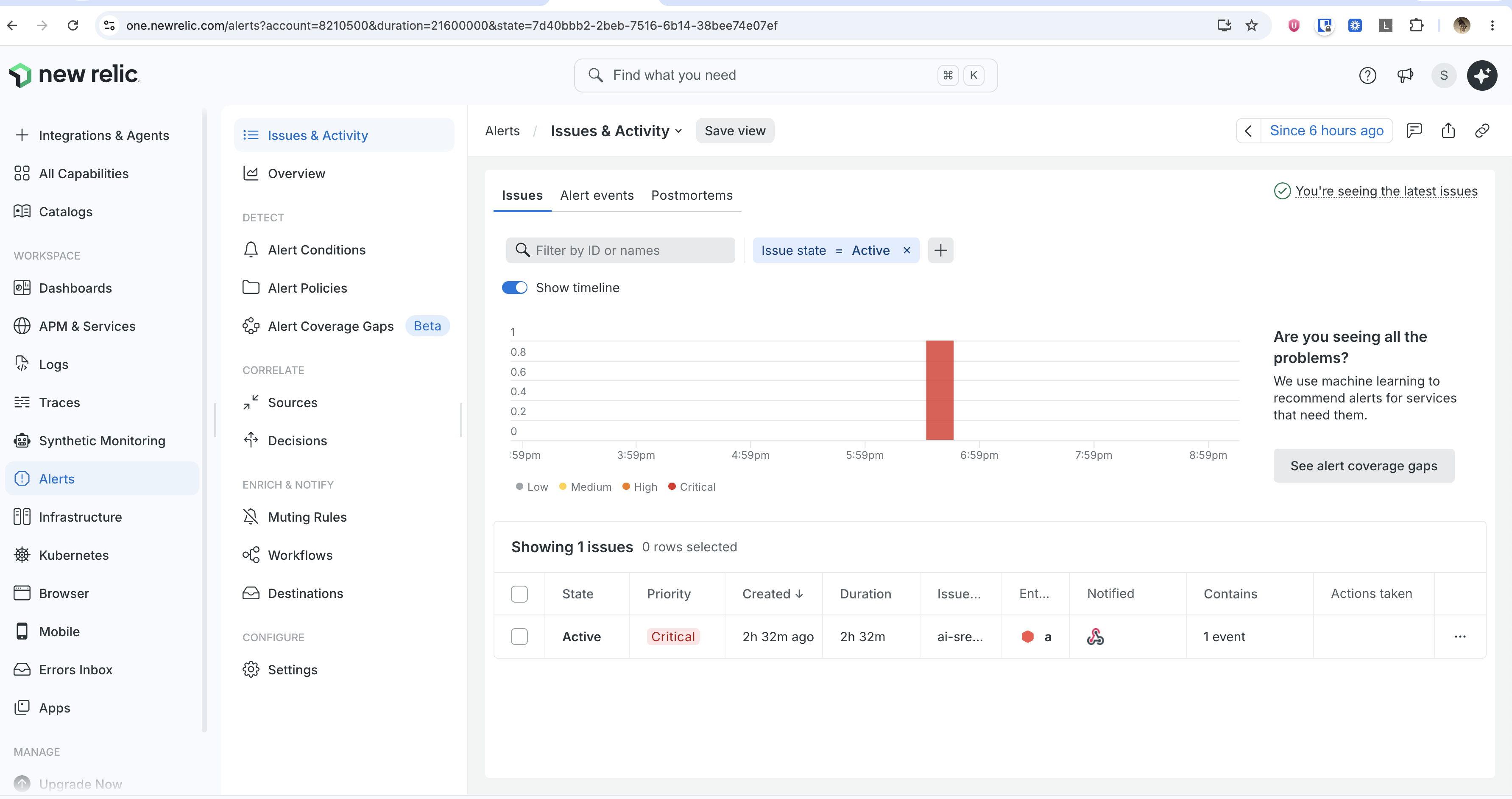
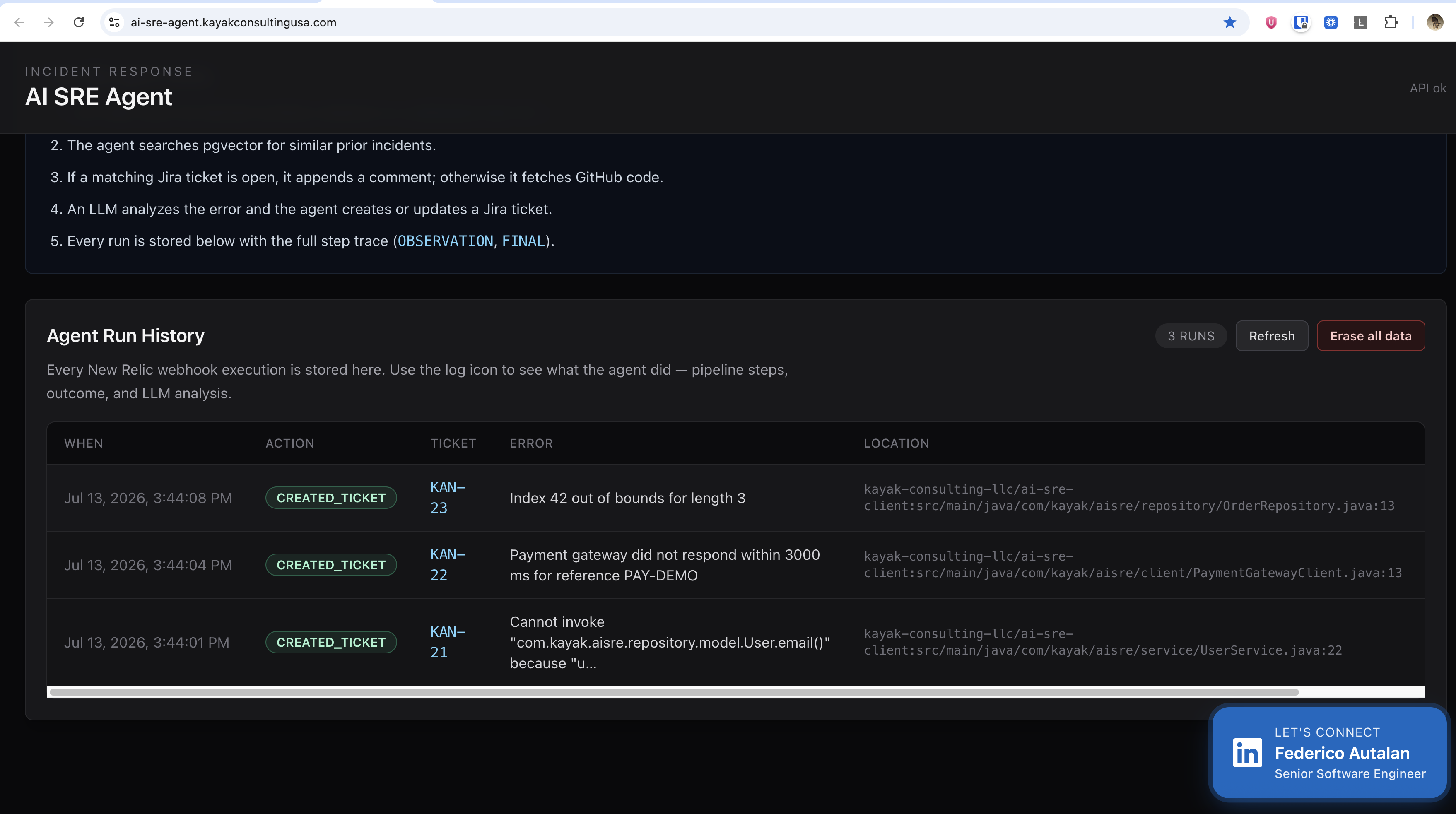
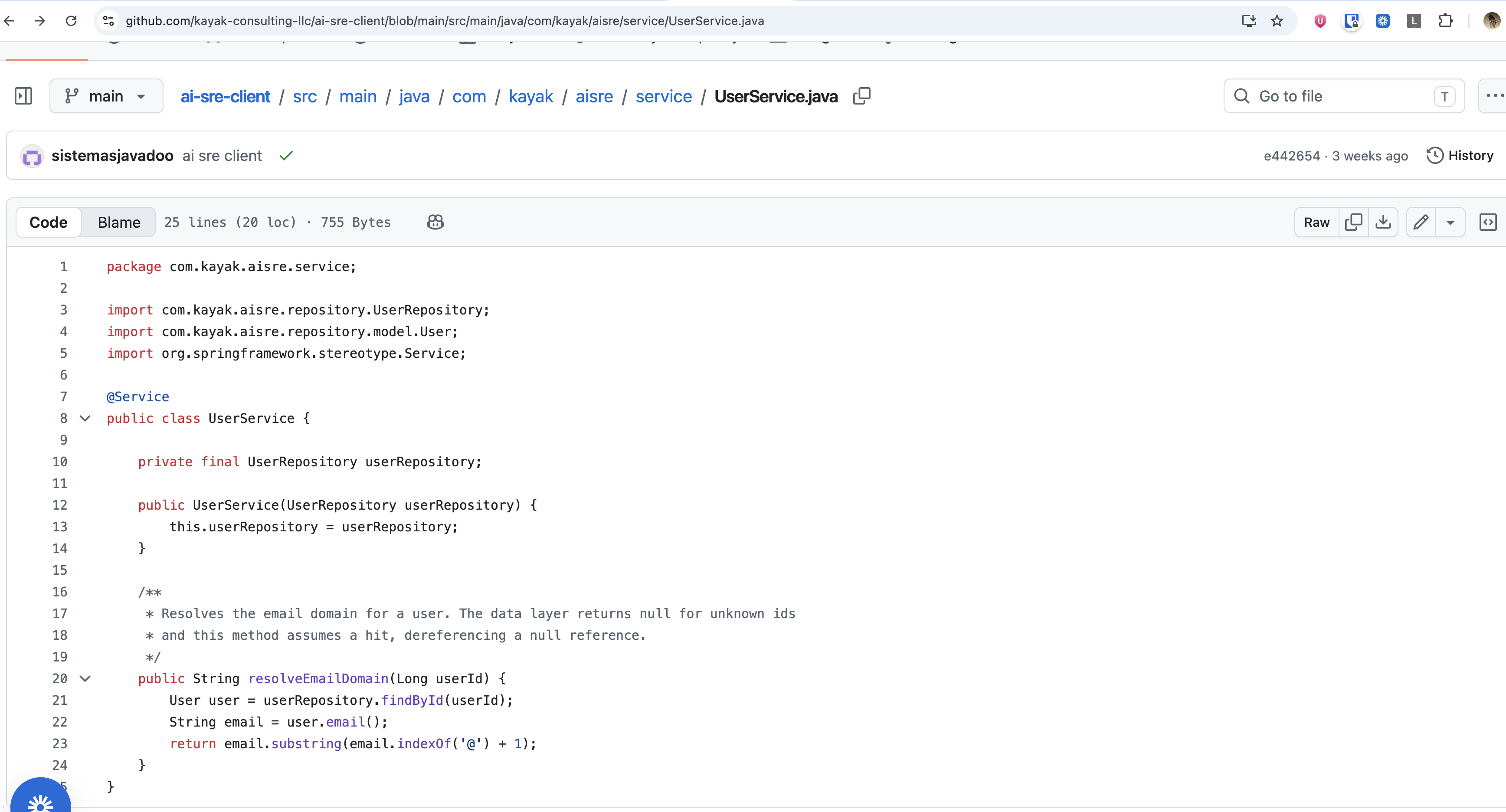
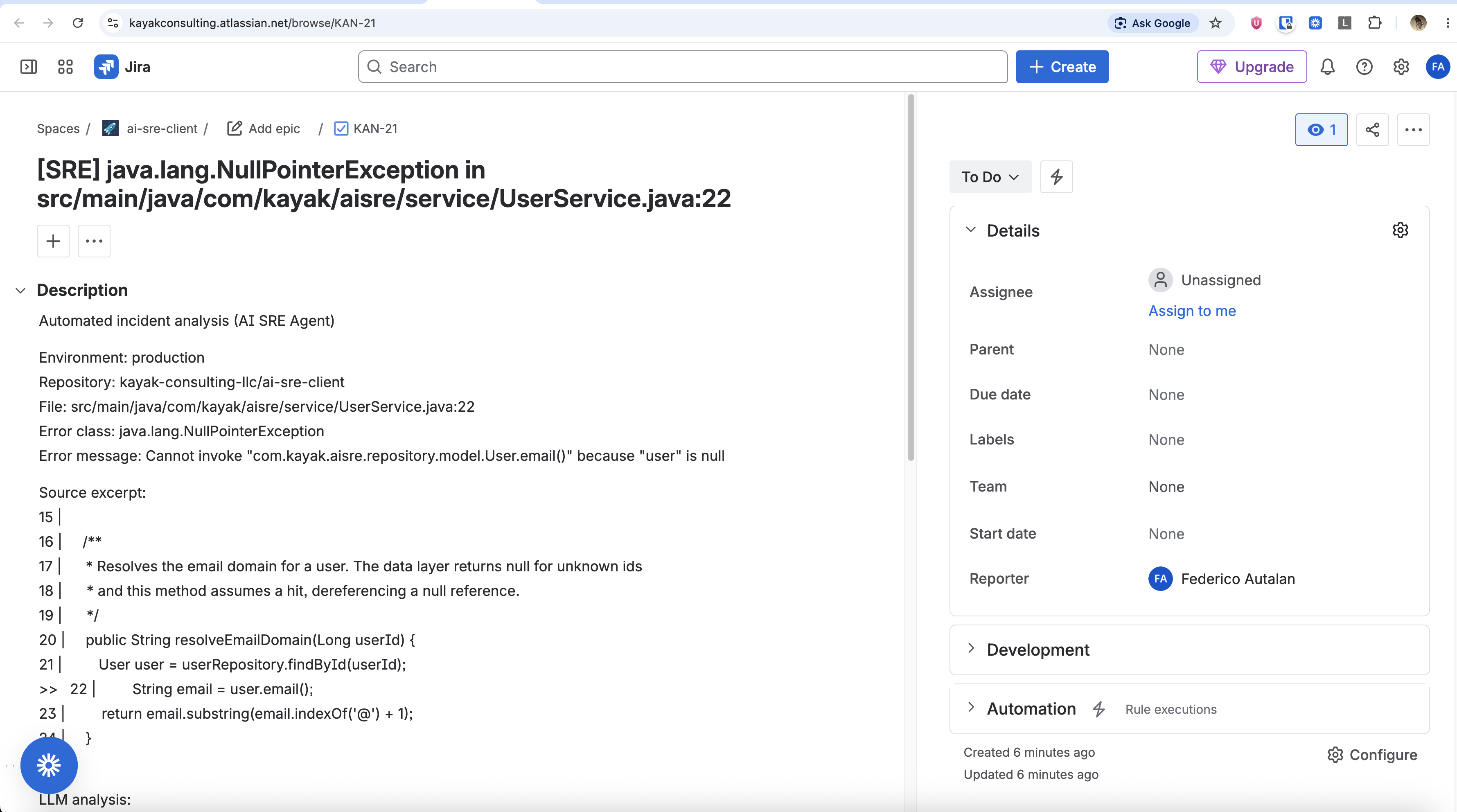
A Spring Boot app tags errors and sends them to New Relic. A Python agent handles the webhook, enriches thin payloads via API, matches similar incidents in pgvector, pulls source from GitHub, runs LLM analysis, and creates or updates Jira. Dedup and routing rules stay in code.
Faster response and resolution: the ticket already carries repo, file, analysis, and prior context so nobody rebuilds the story by hand. One deployment for the whole fleet, customizable to your stack, without bolting on a separate closed product per service.
Two apps in the demo: the client injects faults; the agent is what you would run once for the company.
Live UI · New Relic → agent → Jira
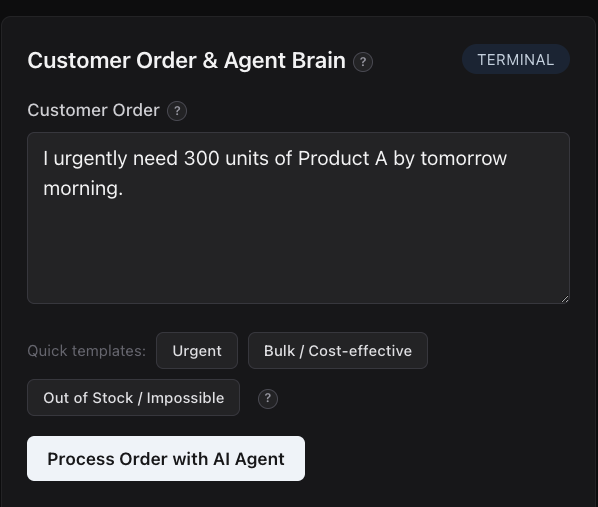
SmartSupply Agent
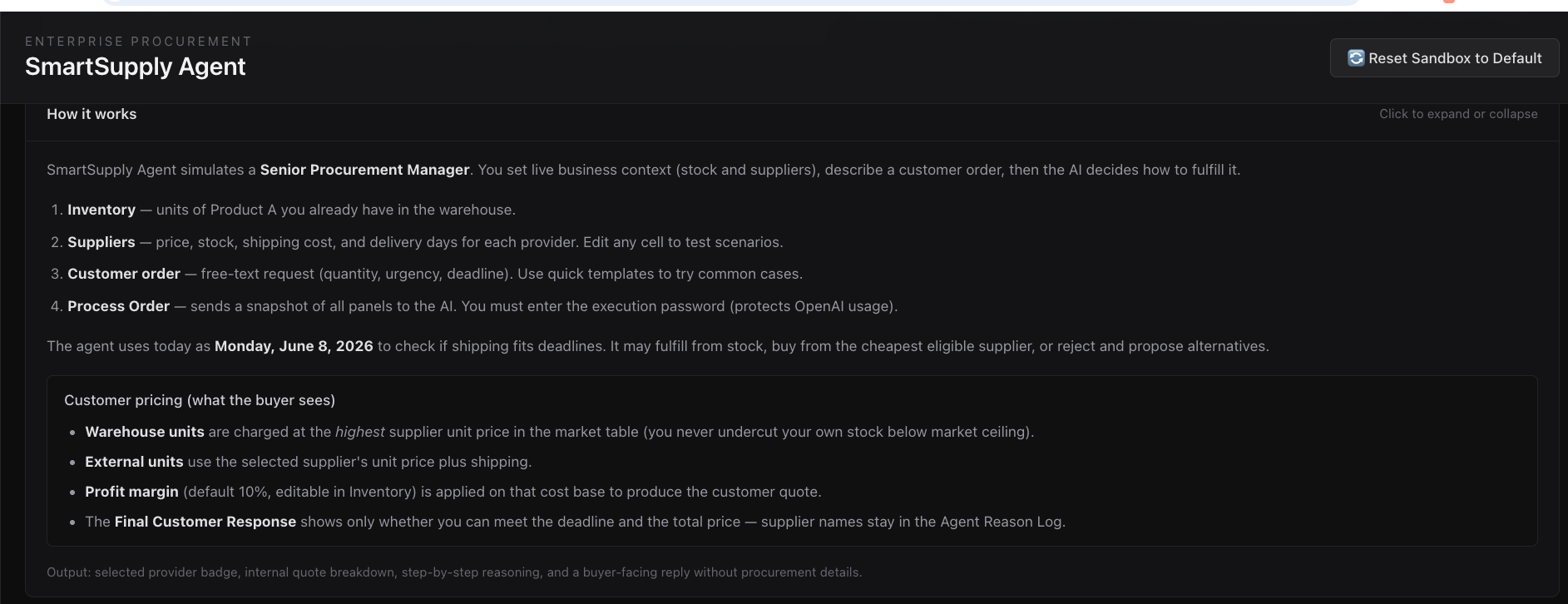
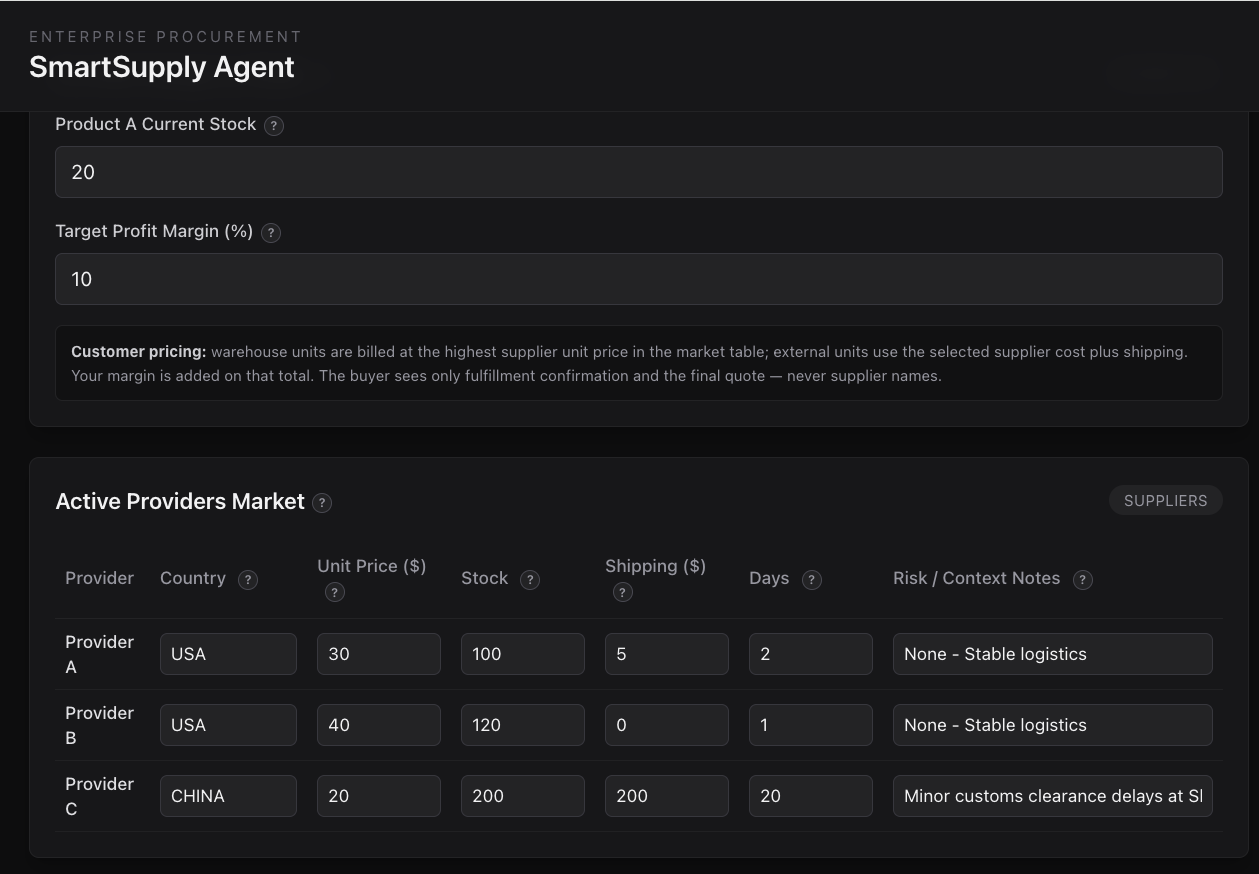
A customer order mixes quantity, deadline, in-house stock, and several suppliers with different prices and lead times. On top of that you have shifting context: a hurricane near a port, higher rates, customs holdups. Working out the best mix by hand is slow and easy to get wrong.
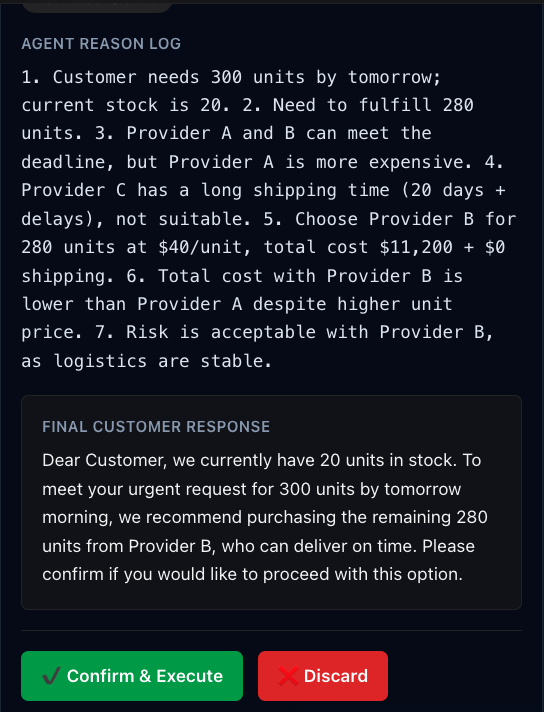
The demo captures that context as free-text notes per supplier (a POC shortcut). The agent weighs structured data and those notes together: warehouse stock first, then one or more external suppliers when needed, respecting delivery dates.
You get a quote that protects margin while meeting the deadline, with the reasoning spelled out. A human approves before anything ships.
Live UI · procurement sandbox
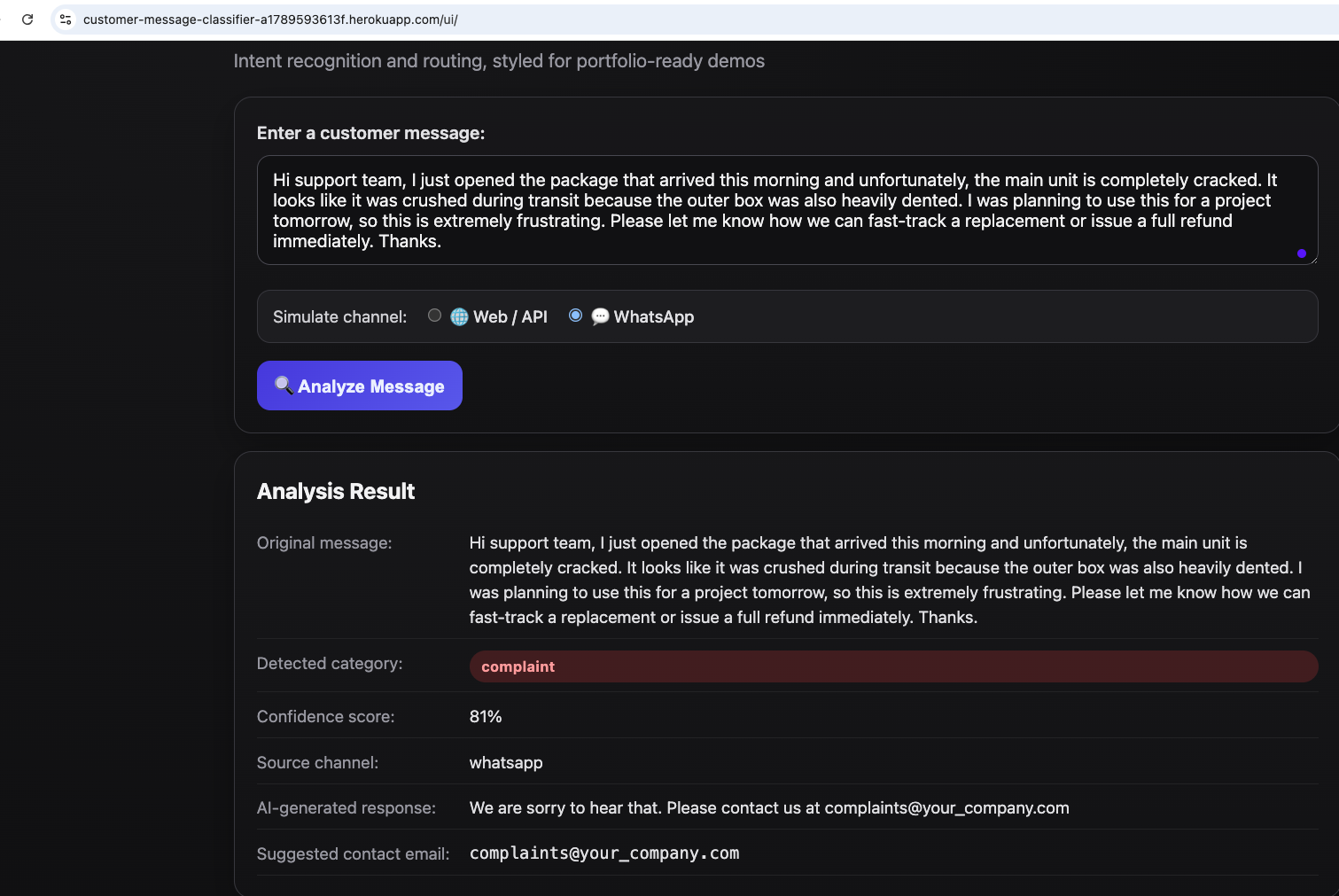
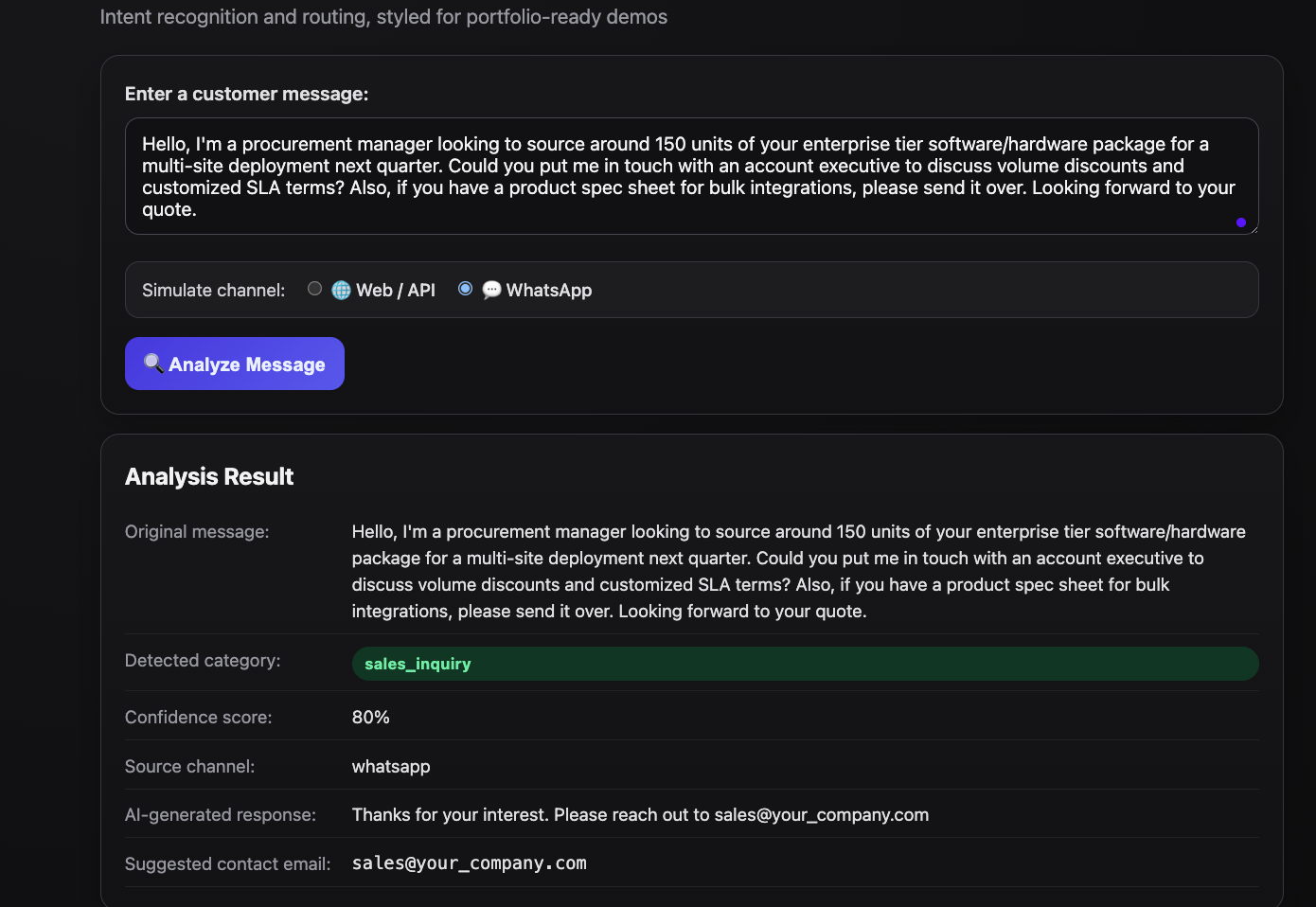
Customer Message Classifier
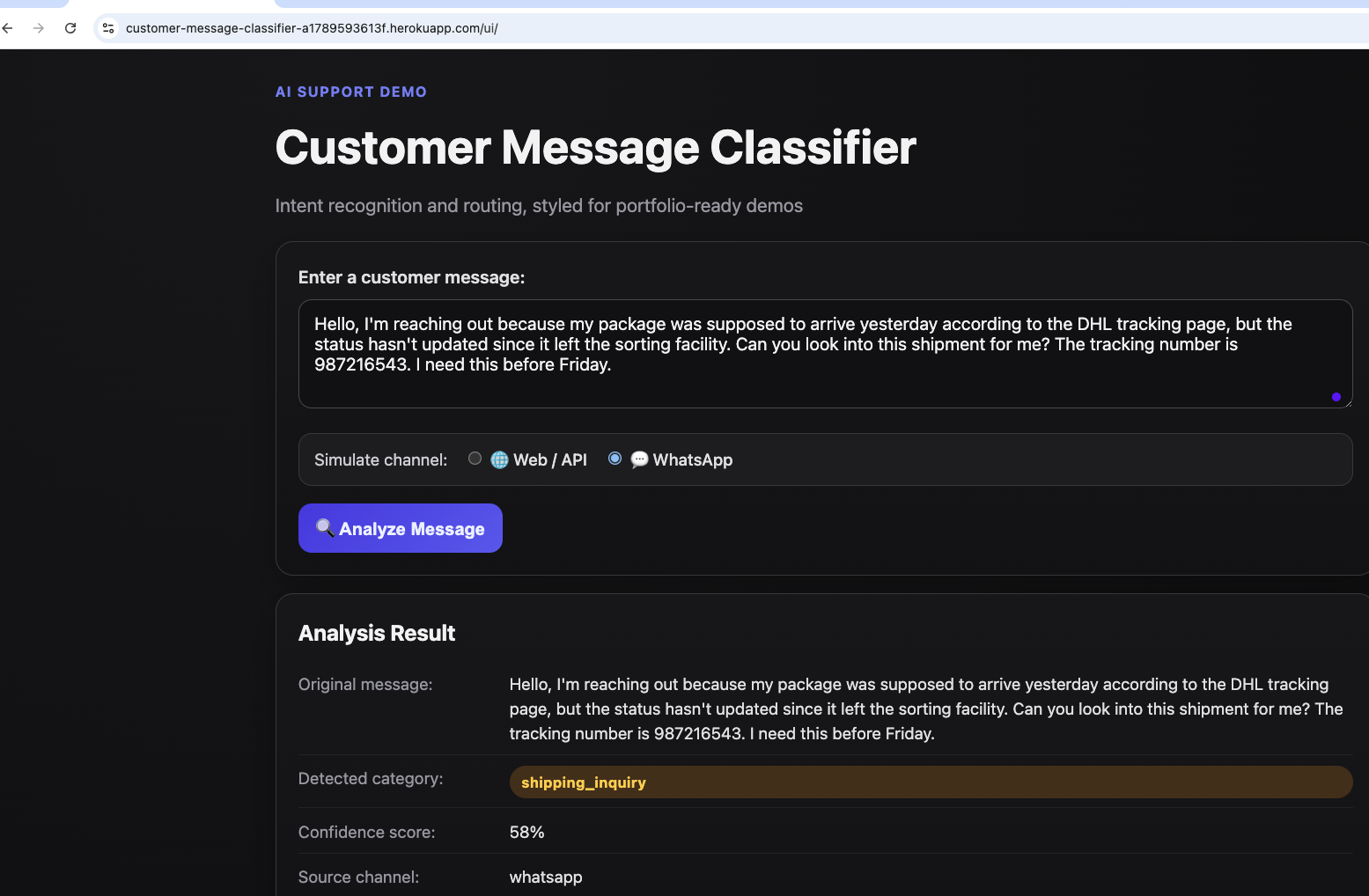
Incoming messages do not arrive labeled. Someone has to read each one, pick the right queue (complaint, sales, shipping), and only then can the customer get a proper reply.
A FastAPI service classifies intent, suggests a department, and drafts a short reply. Same model for web, WhatsApp, email, and SMS; no training dataset required. Live today on the web API; WhatsApp handlers are in the repo.
Less time on manual triage and faster first responses: every message returns a department, suggested reply, and confidence score.
Live UI · sample classifications
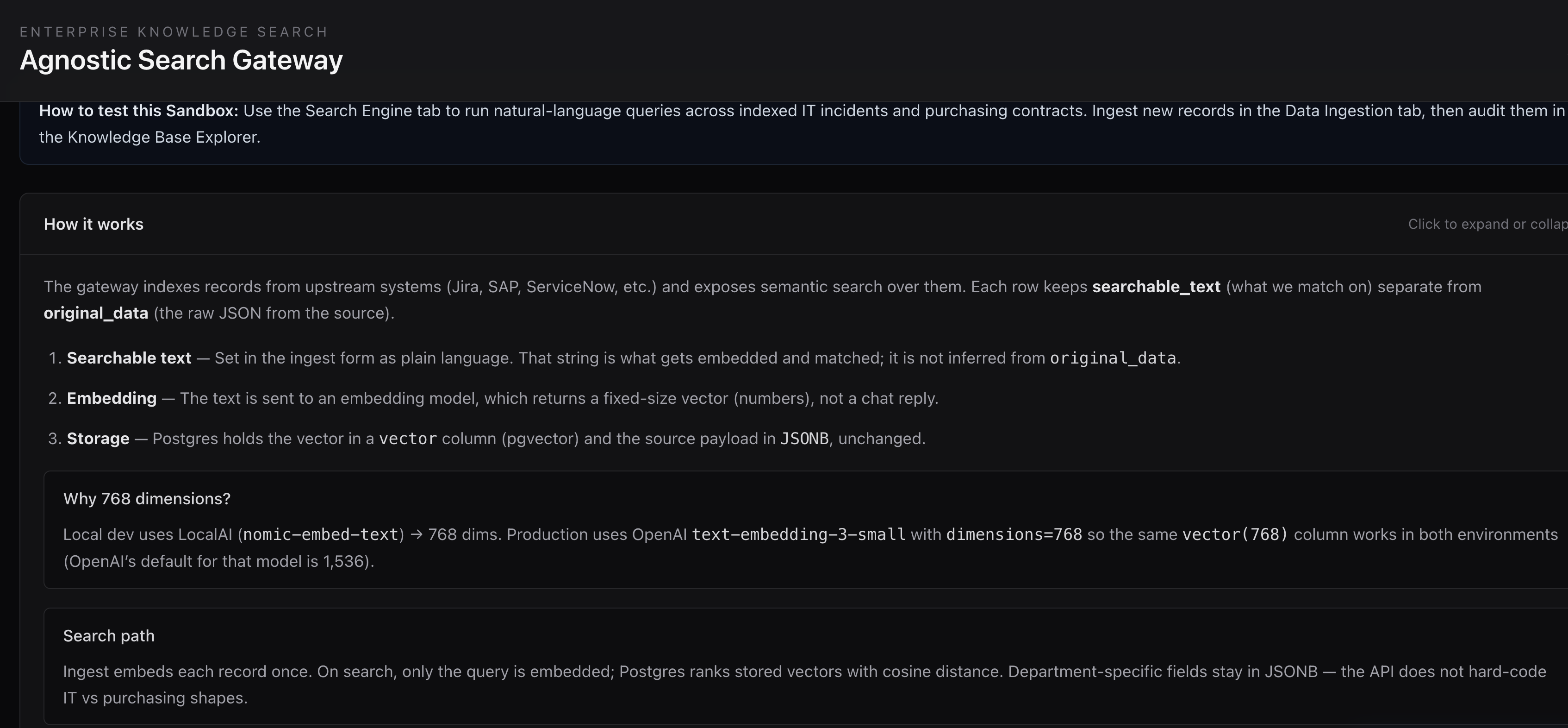
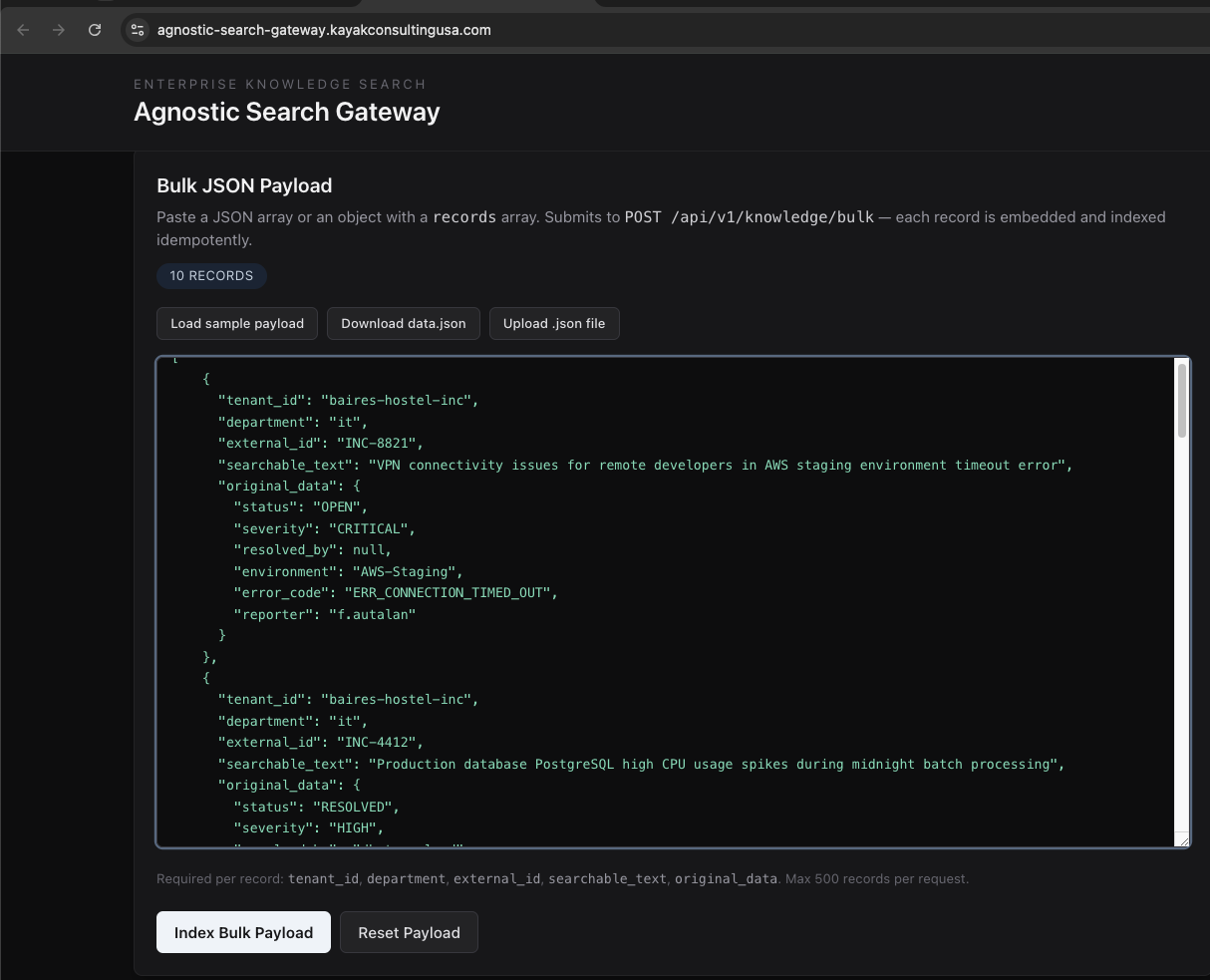
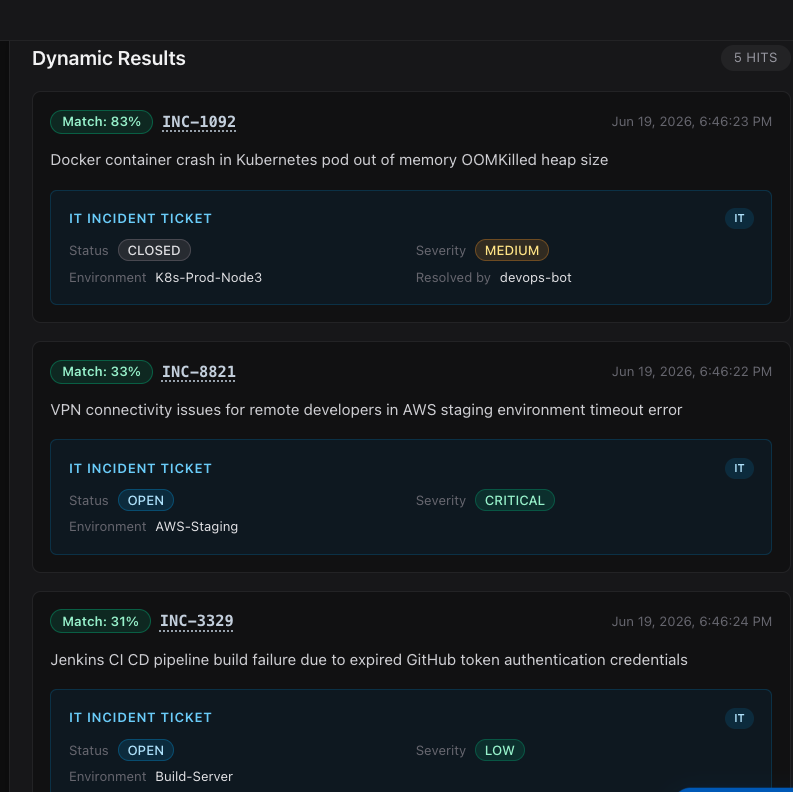
Agnostic Search Gateway
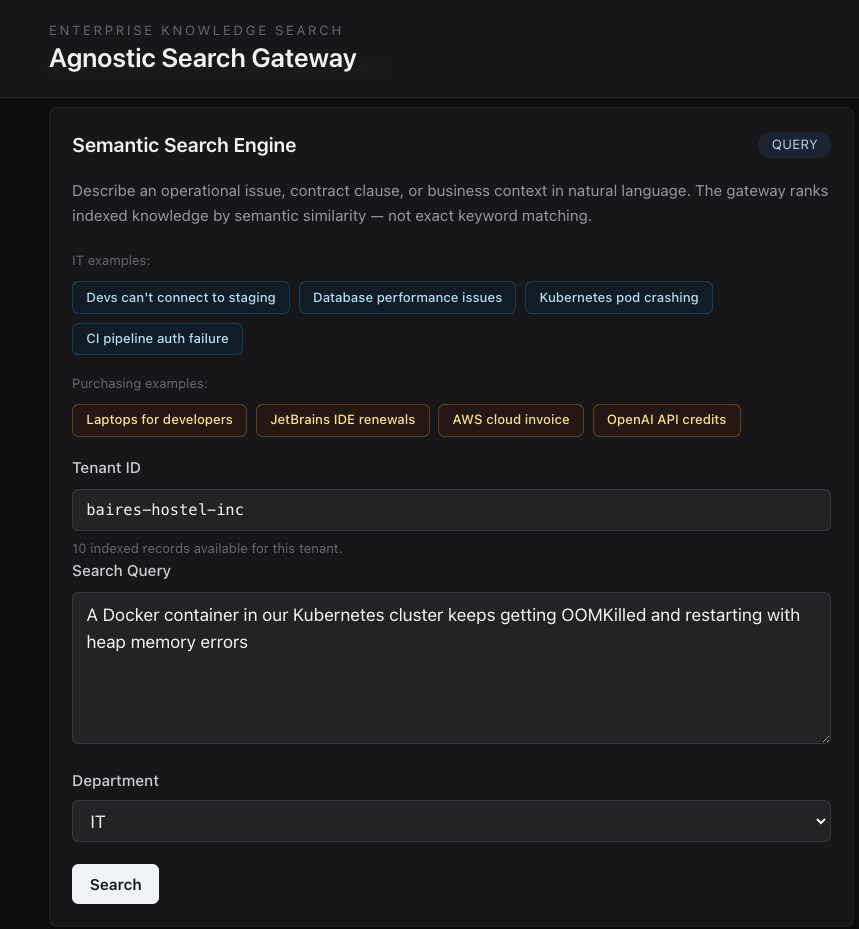
Exact-keyword search breaks down on incidents and contracts. You cannot remember how a case was worded last time, or the new report sounds different even when the issue is the same.
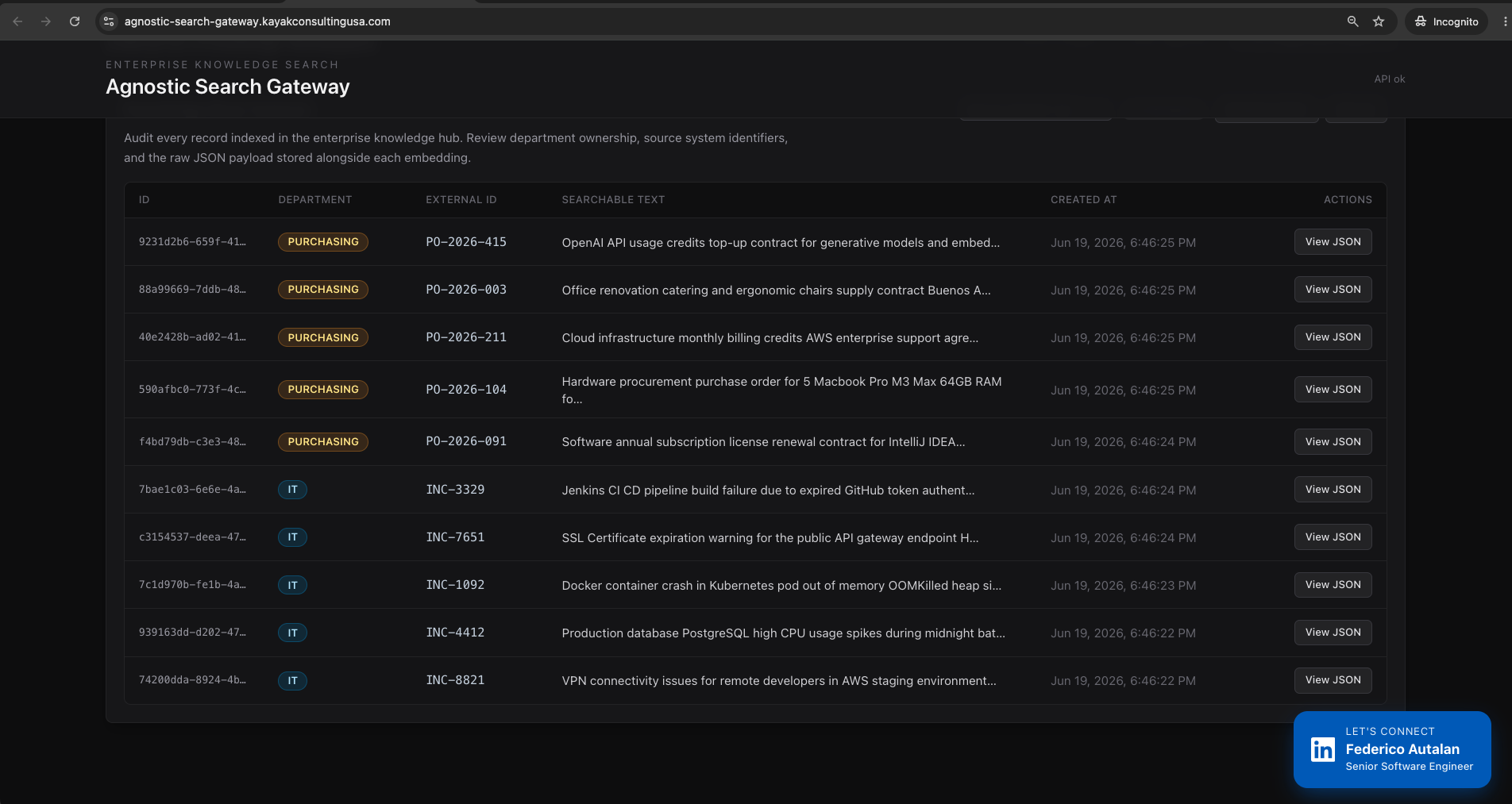
Ingest records from Jira, SAP, ServiceNow, and similar systems, then search the history in plain language. Vectors live in pgvector; lookups are SQL and cosine math, not an LLM call every time.
You find similar past cases even when the wording changes. The POC covers IT incidents and purchasing contracts.
Live UI · semantic knowledge search